Irreversible Loss
Once destroyed, historical structures cannot be authentically recreated without precise digital records.
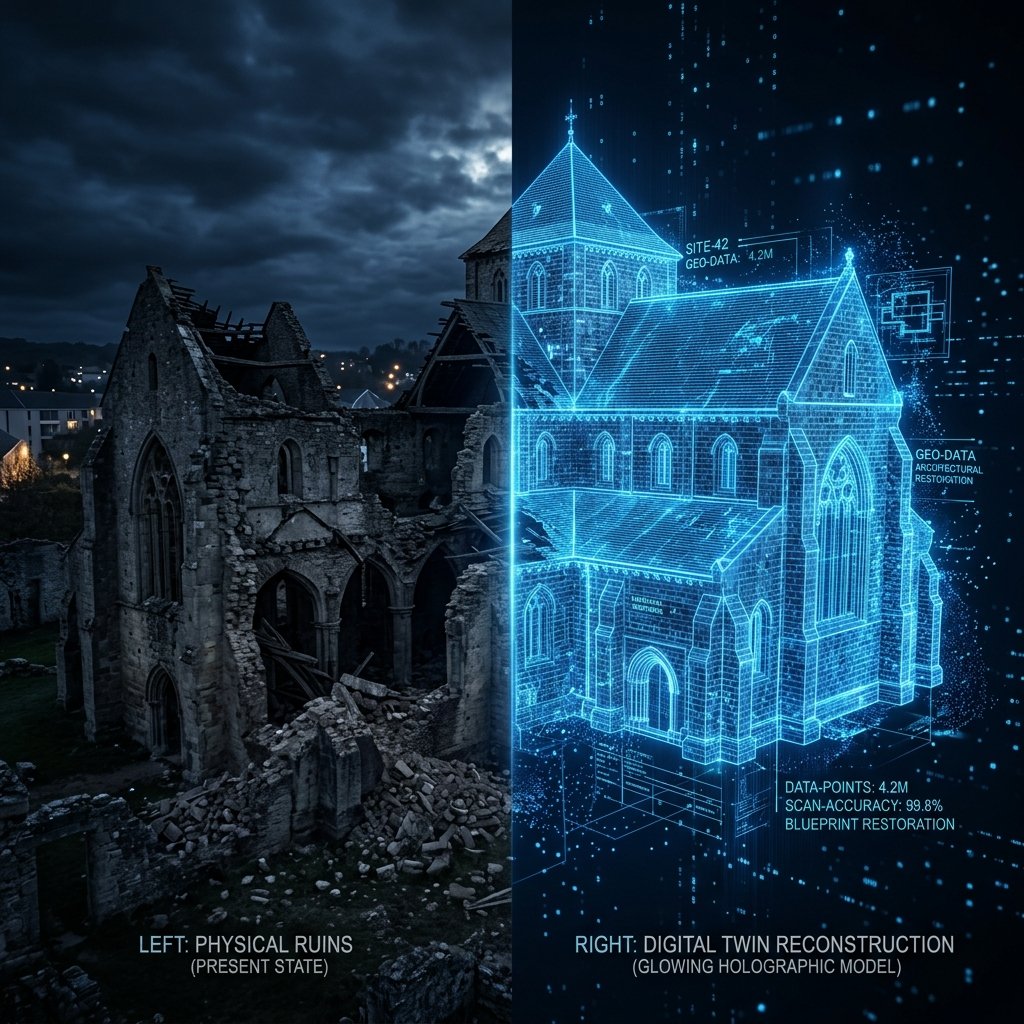
Historical sites face irreversible threats from natural disasters, climate change, urban development, and armed conflict. Traditional documentation methods are inadequate for the scale and urgency of preservation needed.
Once destroyed, historical structures cannot be authentically recreated without precise digital records.
Many historic buildings lack original architectural plans, making restoration speculative and inaccurate.
Current approaches address damage only after it becomes visible — often too late for cost-effective repair.
Without precise data, renovation budgets routinely overrun by 30-60% due to unforeseen structural issues.
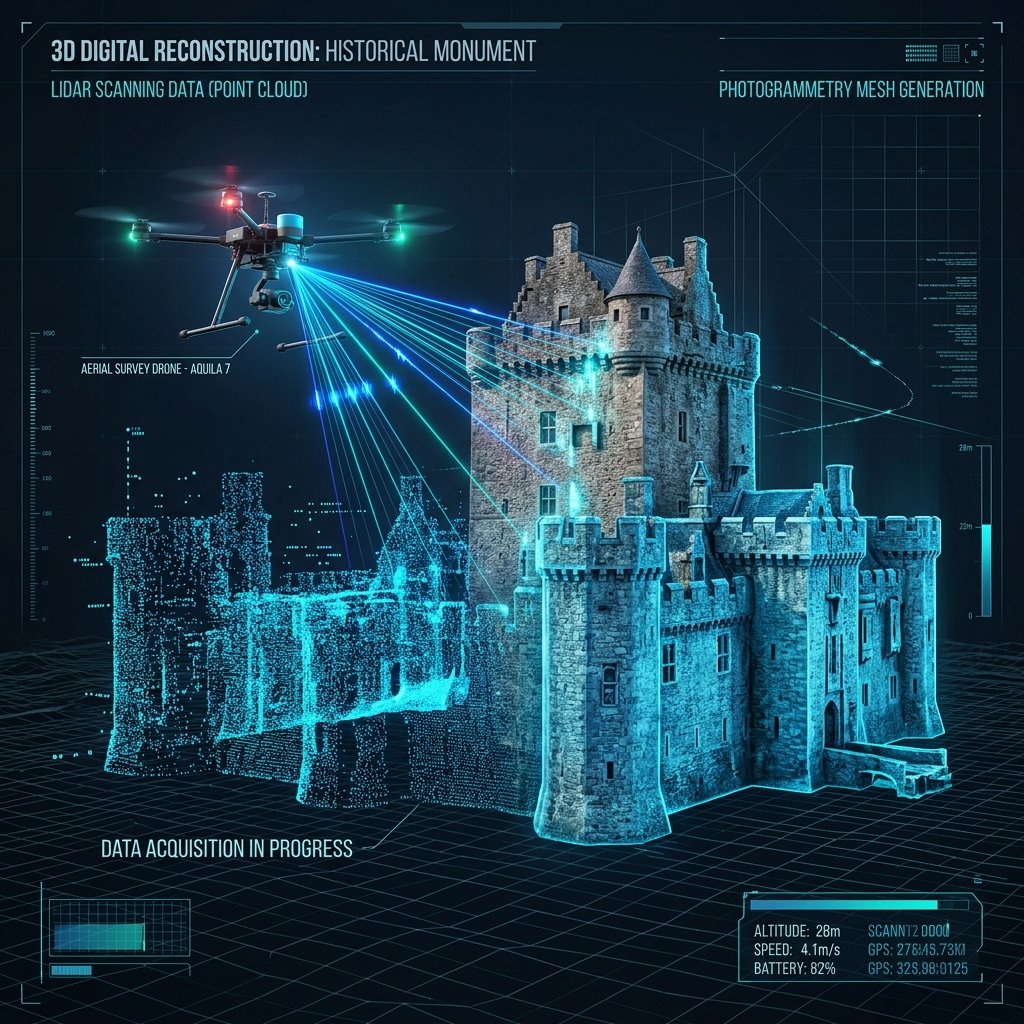
A digital twin is a dynamic, data-rich virtual replica of a physical structure that evolves in real-time alongside its physical counterpart.
Created through LiDAR scanning and photogrammetry, capturing every surface detail of the structure.
IoT sensors feed live data on temperature, humidity, vibration, and structural movement.
Machine learning algorithms detect anomalies, predict degradation, and recommend interventions.
The model continuously updates — serving as a permanent, evolving record of the site's condition.
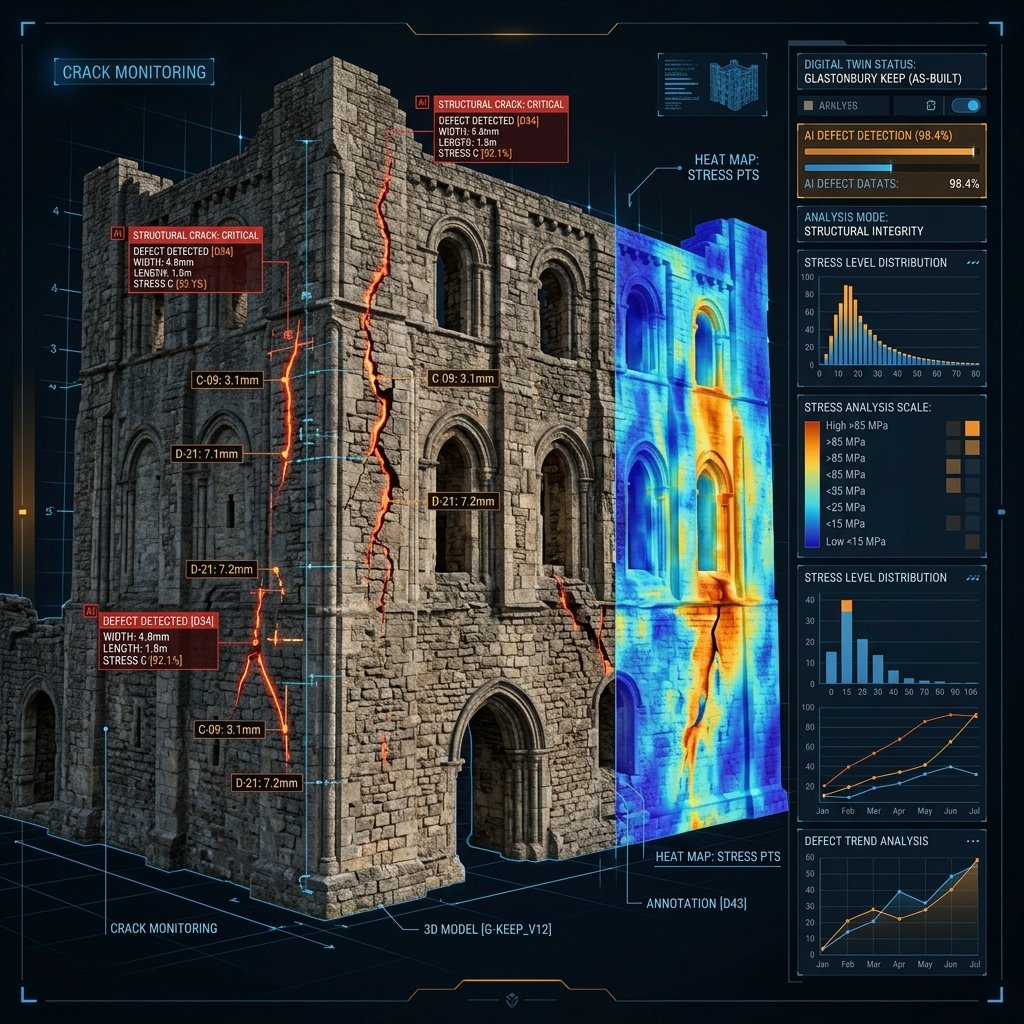
AI-driven analytics combined with regular scans automatically identify and track structural anomalies — catching problems invisible to the human eye.
Tracks crack propagation over time with sub-millimeter precision, alerting when thresholds are exceeded.
Detects stone erosion, mortar loss, water infiltration damage, and biological growth patterns.
Reveals defects in inaccessible areas — inside walls, under foundations — without invasive testing.
AI models predict future degradation paths based on historical trends and environmental conditions.
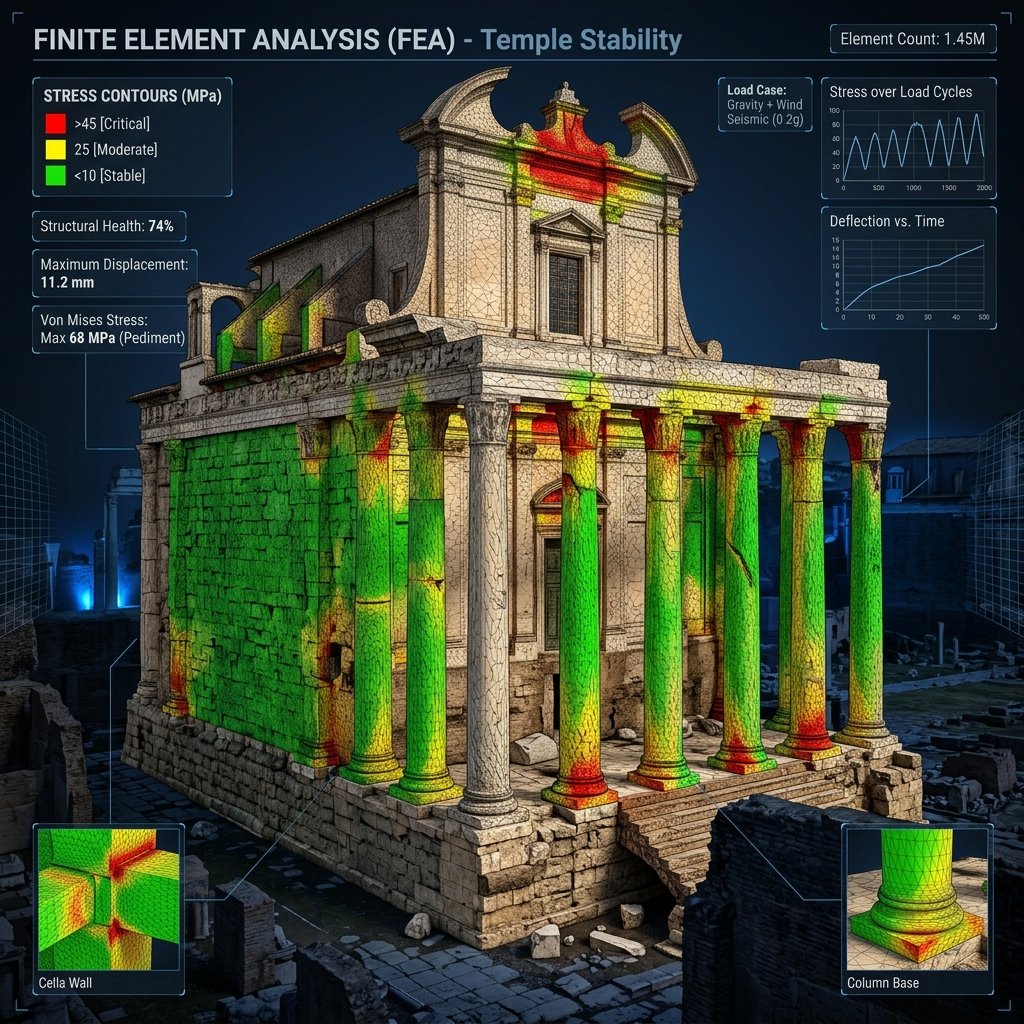
Digital twins enable advanced finite element analysis (FEA) to simulate how structures respond to earthquakes, storms, and long-term environmental stress.
Simulate structural response to gravity loads, wind, seismic events, and vibration from traffic.
Track how temperature cycles, humidity, and pollution affect material integrity over seasons.
Detect millimeter-level shifts in walls, columns, and foundations through periodic scan comparison.
Automatically classify areas as safe, monitor, or critical — enabling prioritized intervention.
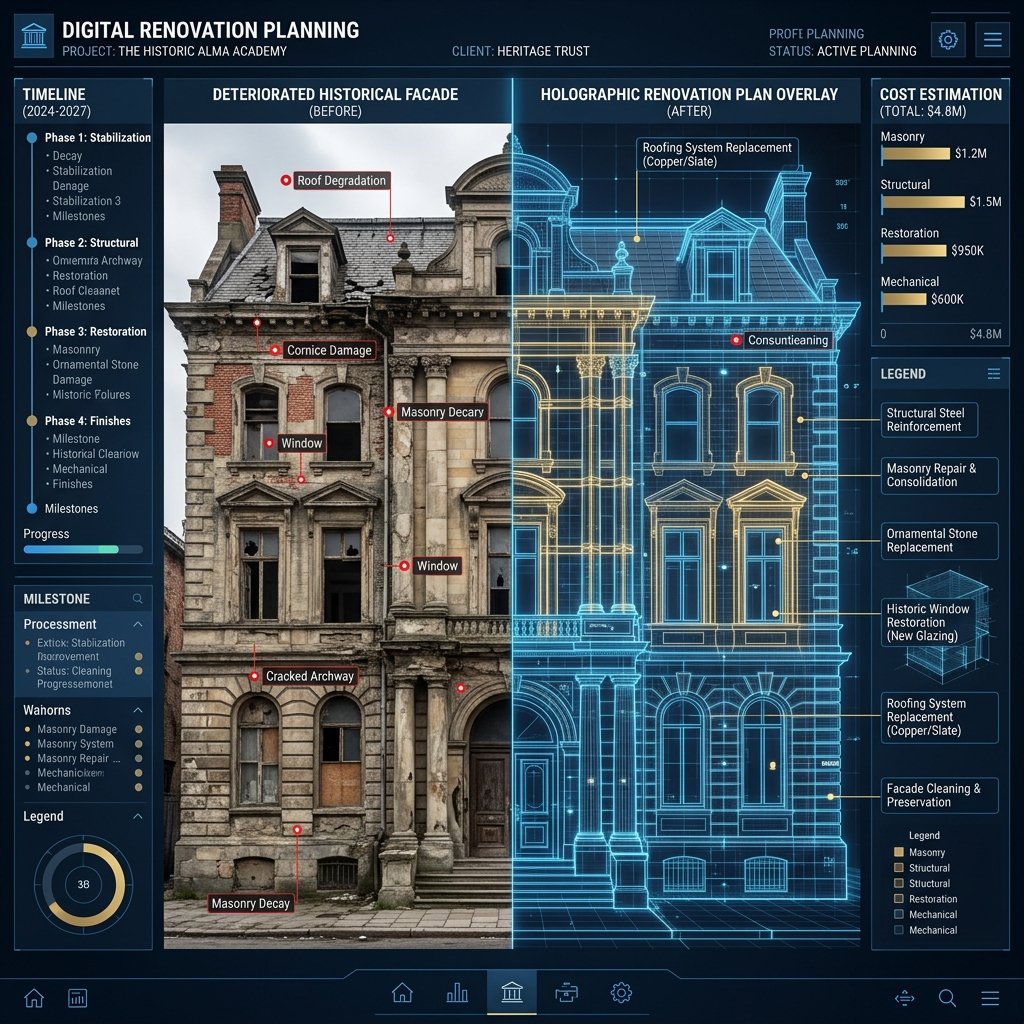
Plan every restoration detail in the virtual space before breaking ground — reducing costs, minimizing risk, and preserving authenticity.
Precise volumetric data enables exact material quantities and labor estimates — no surprises.
Simulate renovation phases digitally to identify conflicts, optimize sequencing, and reduce downtime.
Ensure all planned modifications comply with conservation standards before any physical intervention.
Architects, historians, and engineers work on the same 1:1 scale model in a shared virtual environment.
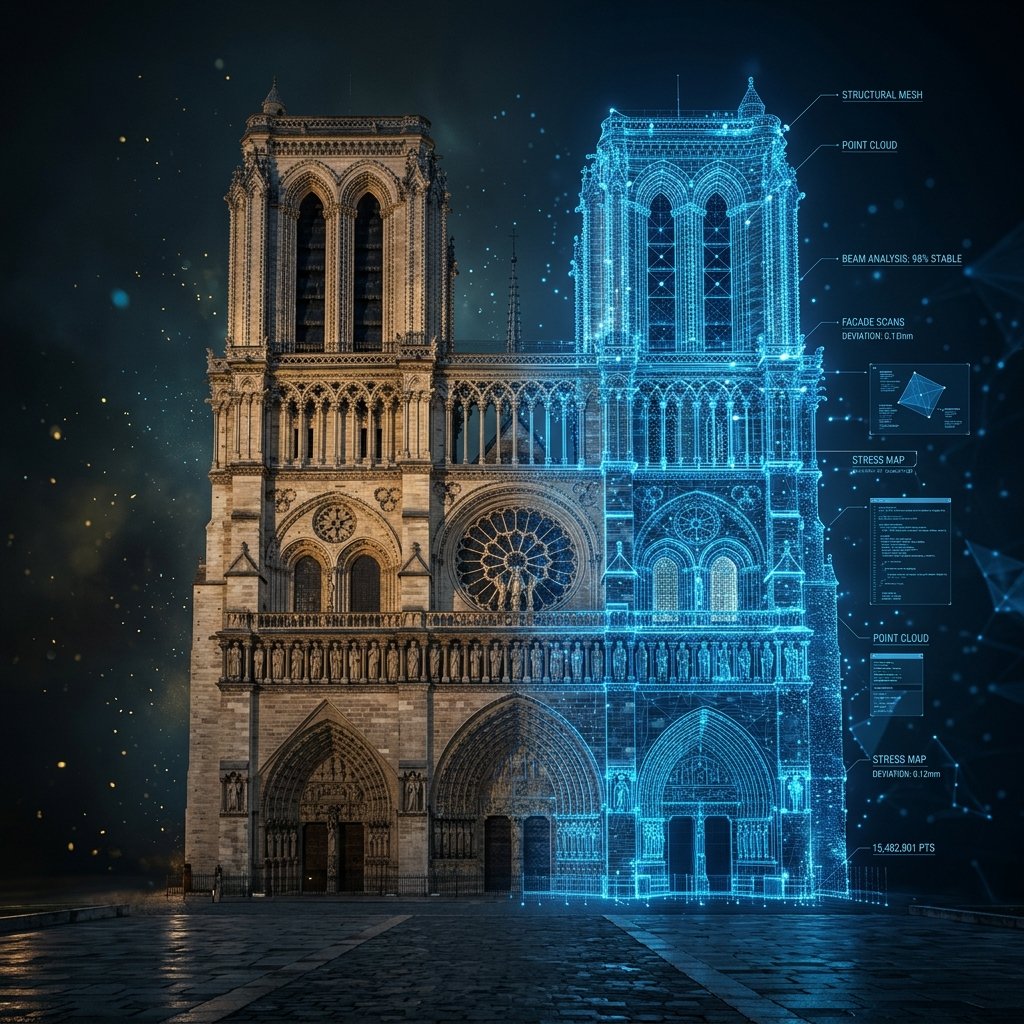
When Notre-Dame burned in 2019, pre-existing LiDAR scans by Andrew Tallon provided the millimeter-accurate "ground truth" blueprint that made faithful reconstruction possible.
Captured structural details — vaulted ceilings, flying buttresses — with sub-millimeter accuracy before the fire.
Dassault 3DEXPERIENCE enabled architects, archaeologists, and engineers to collaborate in a 1:1 virtual space.
Teams simulated structural stability and tested reconstruction plans digitally before any physical work began.
A deep-tech leader specializing in advanced artificial intelligence, distributed systems, and real-time spatial computing. Eighth Dimension provides the core AI algorithms, 3D mapping capabilities, and intelligent processing required to bring the digital twin to life.

Experts in digital transformation and enterprise product engineering. Krios builds the secure cloud infrastructure, data analytics pipelines, and intuitive stakeholder dashboards that make the digital twin actionable, scalable, and accessible.